



If you are already planning to do the Salkantay hike, you are probably wondering: “How difficult will this hike be?” Salkantay is not an easy hike. Here we will give you all the guidelines and everything you need to know about the difficulty of the Salkantay hike, what to expect on the hike and how to prepare.
There are many options that you can choose from, and each one has different levels of difficulty, although it is not the most difficult hike in Cusco, but the steep ascents and descents and the high altitude make both routes difficult.

Salkantay Trek 5 Days Difficulty
- Day 1: ★★★ MODERATE – 8.8 km (5.5 miles) | 5-6h | 300 m accumulated slope/loss
- Day 2: ★★★ ½ MODERATE + – 17.6 km (9.9 mi) | 8-9h | 400 m of positive slope; 1730m loss
- Day 3: ★★★ MODERATE – 11.5 km (7.1 miles) | 4.5-5h | 820 m elevation loss
- Day 4: ★★★ MODERATE – 15.5 km (9.6 miles) | 5-6h | 775 m of positive slope; 975 loss
- Day 5: ★ EASY – Tour to Machu Picchu
Our 5-day Salkantay trek is the route most hikers opt for. Although it is longer, it is not as difficult as the 4-day hike. We consider it to be moderately difficult overall: 3 stars out of 4.
Unlike most Salkantay treks (which start in Mollepata), we start the trek in Soraypampa and take a special round trip visit to Lake Humantay on day 1. Although it is a moderately difficult uphill climb, especially the second Halfway through the 1.5 hour hike, visiting the stunning Humantay Lake is a real treat for Salkantay hikers!
Then we return along the same path. The uphill hike is strenuous and can be difficult for many; On the way down, the slope of the trail can be hard on the knees. If you have bad knees, this may not be a good hike for you. No matter what, we recommend bringing or renting trekking poles.

Salkantay Trek Difficulty: Day 2 is the most difficult
Day 2 is without a doubt the most difficult part of the Salkantay trek. The day begins with a 3-hour zigzag hike to the highest point of the trek, the Salkantay Pass, located at an impressive (literally!) altitude of 4,600 m (15,092 ft).
If you’re thinking “that doesn’t seem so bad,” remember: that’s 400 m (1,312 ft) higher than Dead Woman Pass (Warmihuañusca), the highest point on the Inca Trail.
You must be fit and mentally prepared to hike up to 4600m.
The trail gets a little easier on day 3, plus you’ll have a chance to learn about coffee!
The third day of the tour features a slow, gentle descent through the semi-tropical Andean jungle over the course of 4.5 to 5 hours. A 15-minute drive will take you to Lucmabamba camp (or you can walk along the road for another hour, but it can be unpleasant due to traffic and a lot of dust).
If time permits, in Lucmabamba you will have the opportunity to learn about traditional coffee making from a member of the local coffee cooperative, and enjoy the results!
Another unique twist on the difficult Salkantay hike: day 4 and the Llactapata ruins
On day 4, it will be a tough 3-hour hike through the jungle-covered slope to Llactapata. You climb almost 800 m from Lucmabamba to Llactapata, and although you are now at a gentler altitude, it is hotter and this can be difficult.
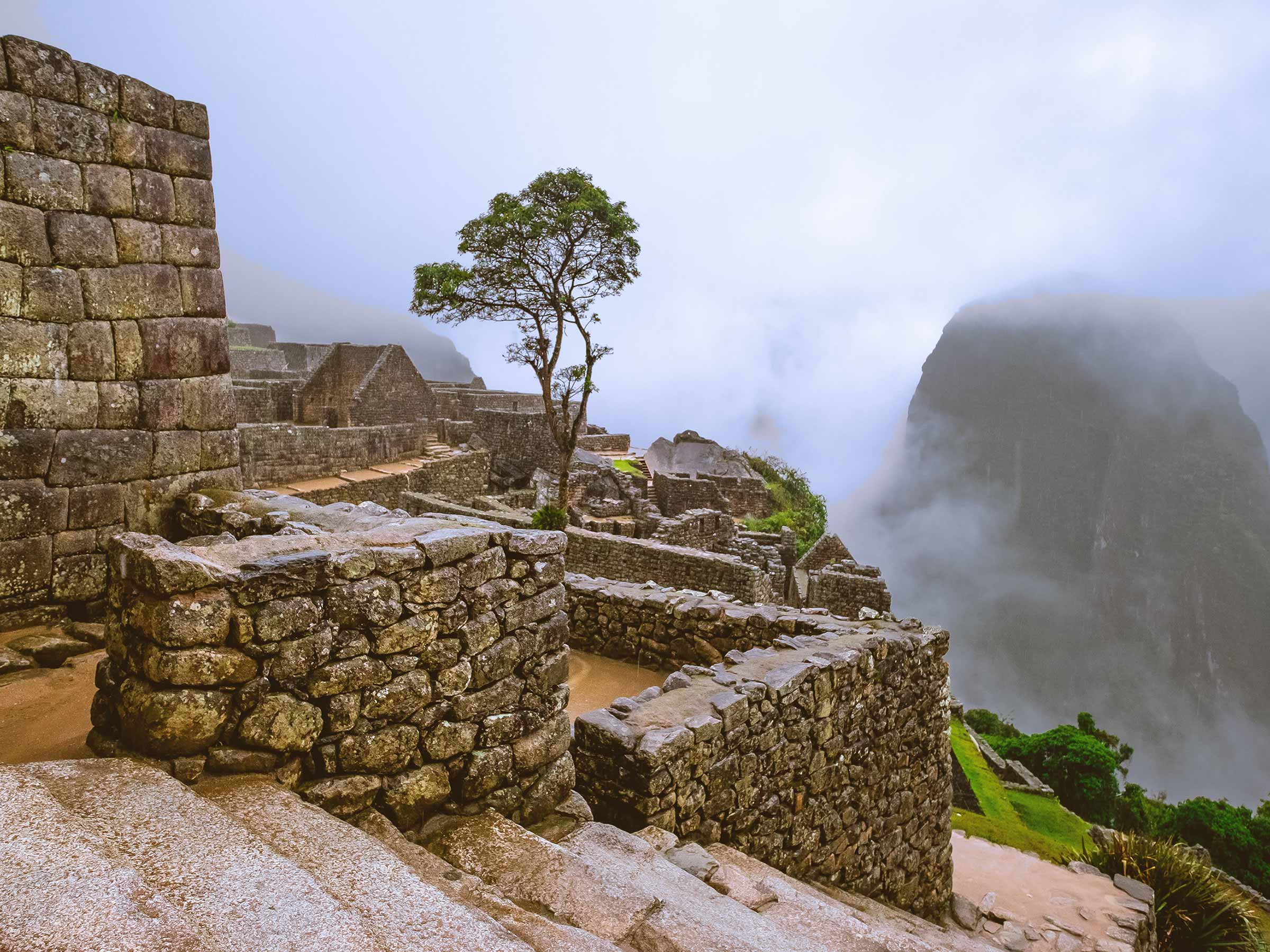
For us, Llactapata is the perfect introduction to Machu Picchu! It is an interesting Inca ruin with a fascinating perspective across the mountains to Machu Picchu, and an unforgettable way to start your visit to the ancient Inca citadel!
Your guide’s explanation will make you think about how incredible the Incas really were. One of the funnest facts about Llactapata (also spelled “Llaqtapata” and meaning Upper City in Quechua) is that it was “discovered” by Hiram Bingham before his first visit to Machu Picchu. However, his notes were not accurate and the ruins were actually lost to the world until modern explorers Hugh Thompson and Gary Ziegler once again located Llaqtapata in 2003.
From Llactapata there is a 2-hour walk to Hidroeléctrica along a steep and muddy road (the last 3 km are by road). The walk back is another very steep challenge as you descend almost 1000m.
This is definitely a time where trekking poles will come in handy!
Then, you have the option of walking another 2.5 hours or taking the train to Aguas Calientes. (The cost of the train ride is included in the price of your hike!)
After a night in a comfortable hotel, we dedicated day 5 to visiting Machu Picchu, before returning to Cusco.
Salkantay Trek 4 Days Difficulty
- Day 1: ★★★★ CHALLENGE – 17.5 km (10.9 miles) | 8-9h | 920 m elevation difference possitive
- Day 2: ★★★ MODERATE – 14.3 km (8.9 miles) | 6-7h | 110 m of positive slope; 2550 m loss
- Day 3: ★★★ MODERATE – 15.5 km (9.6 miles) | 5-6h | 760 m accumulated slope/loss
- Day 4: ★ EASY – Tour to Machu Picchu
For those who want a bigger challenge, we also offer a 4-day Salkantay trek for those who are fit and resilient. This hike includes a difficult first day via Chuñuna and a very high altitude camp the first night (4490 m/14,731 ft). You must be well acclimatized to do this difficult hiking adventure through the Salkantay!
This option is almost the same as the 5-Day Salkantay Trek, but condenses it into 4 days, while adding a unique and challenging detour on day 1. The first day in particular is a very long hiking day (8 to 9 hours for most hikers). with a steep and challenging climb leading to a very high altitude campsite.
This hike requires a solid level of physical fitness and mental preparation, as well as at least 3 days of acclimatization before starting.